Issue 12.25 ~ ekphrasis with 6th grade

Welcome to
WHISPERshout Poetry Magazine,
Issue 12.25, December 2025
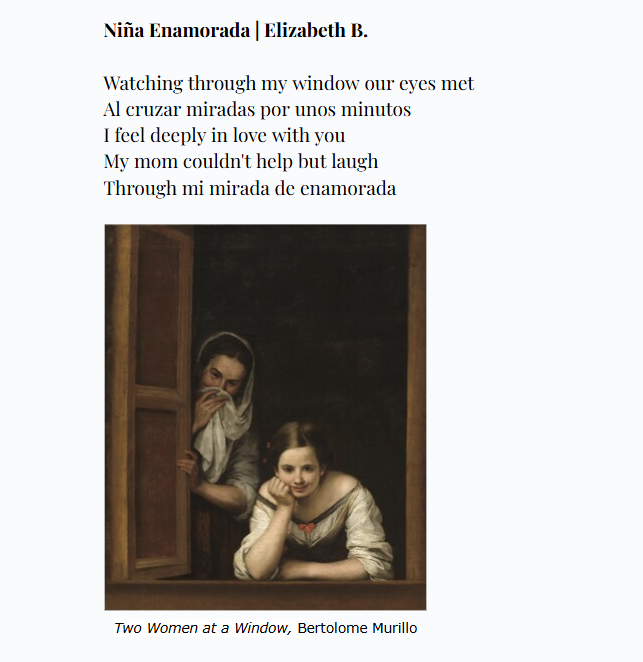
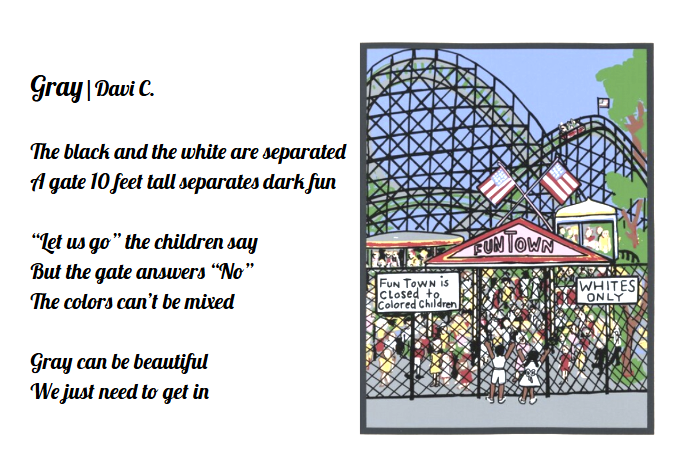
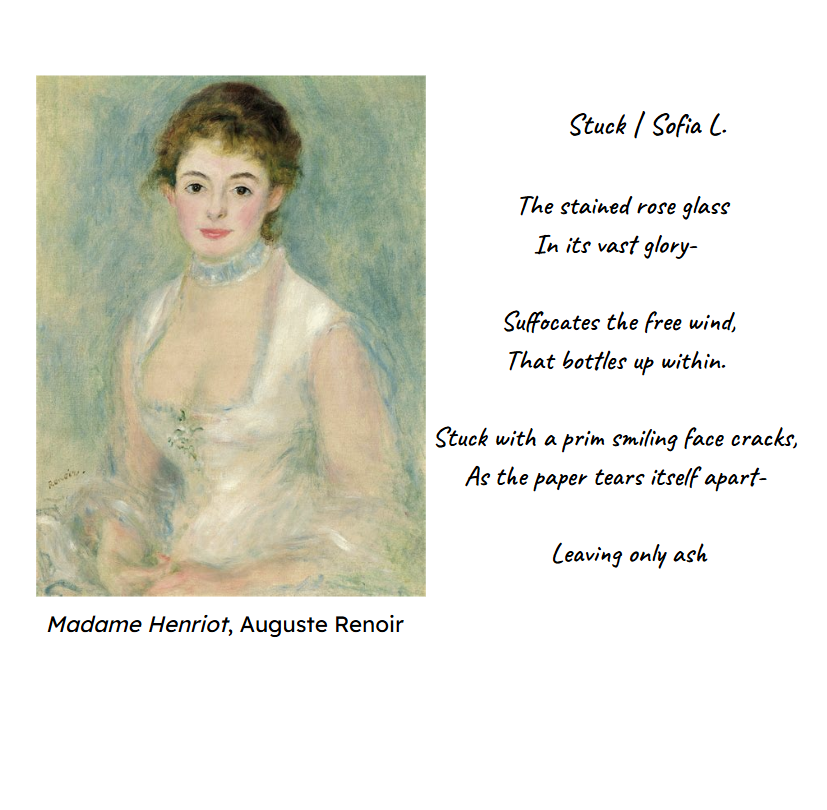
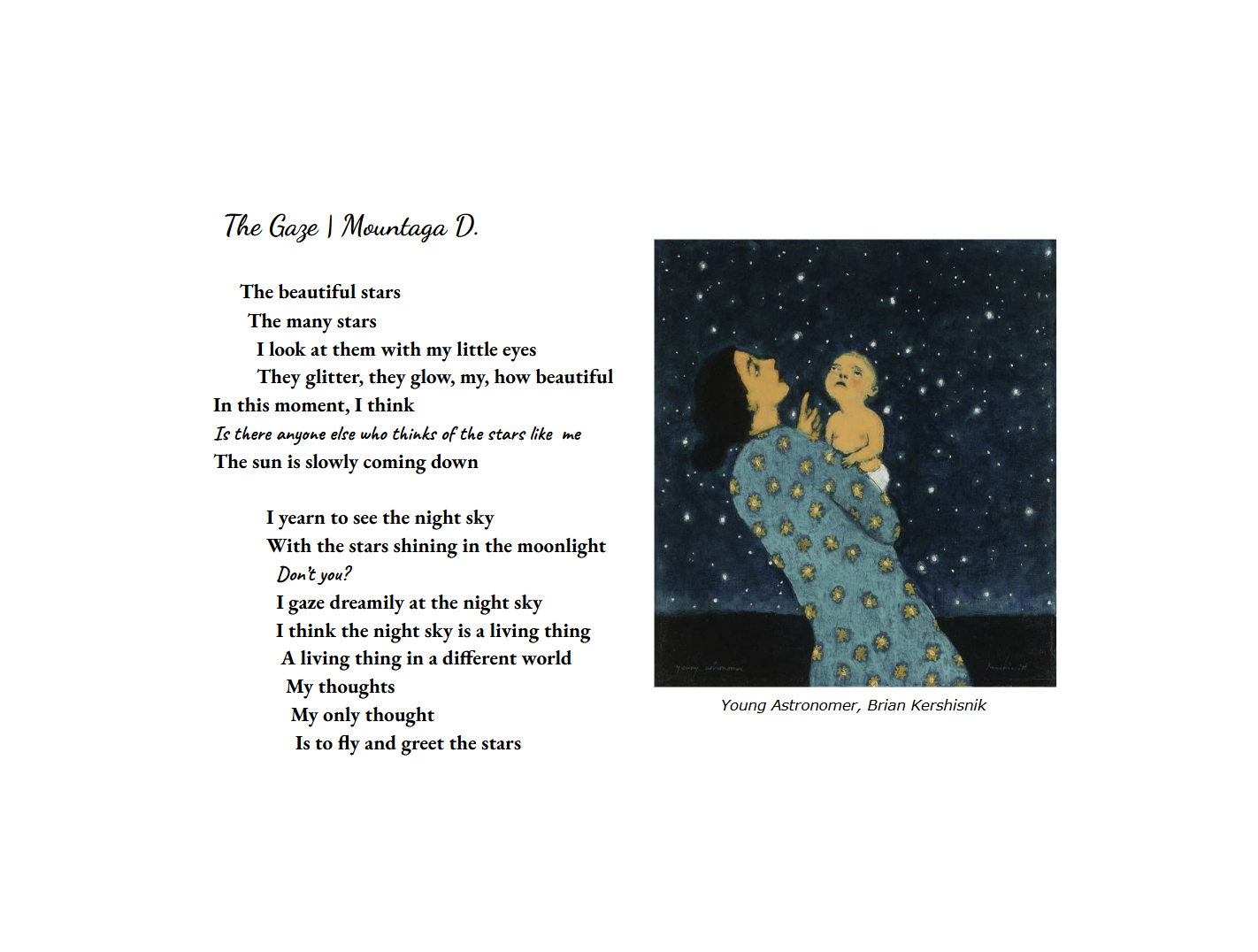
EKPHRASIS is the word for works of art that are about OTHER works of art—especially writing about visual art. Here are poems about paintings written by 6th graders who were considering the question of power in a relationship: who has it and how are they using it?
Some poets wrote about the painting visible within the frame. Some wrote from outside the frame, bringing in “invisible” ideas. All wrote with imagination and an ear for the music of their language.
See which poems are your favorites, and WE ENCOURAGE YOU TO SUBMIT YOUR WORK, TOO, by clicking the “submit a poem” button at the right… and do comment on the magazine down below! Our poets love to know what you think!
POEM #1 - Aria, 5th grade
Our first poet Aria focuses closely on one particular bird, speaking to the bird with lively details: how it sounds, how it moves, how it feels, how it looks. “You rest in your nest that is wonderfully weaved” is like a birdsong itself!
POEM #2 - Willow, 5th grade
This poem also addresses an animal, but not just any passing bird. Here Willow talks to her pet Wednesday, gone but definitely not forgotten. Look at the way she uses “sincerely” in two different ways: to open her letter with an honest opinion, and at the end as the usual closing. Willow also uses line and stanza breaks to intensify the emotion around losing her pet.
POEM #3 - Andrea, 5th grade
In this poem Andrea uses a first line that she borrowed from a classmate, Michael (read his poem below.) When someone “has a way of finding” you, it could sound reassuring or a little ominous, which adds interest to the poem. Like Michael, Andrea uses a high-low contrast, but what really stands out here is “that scent,” the idea that some people know us so well they can smell where we are! Look how the closing line repeats the idea and connects it to the first line with “finding me.”
POEM #4 - Michael, 5th grade
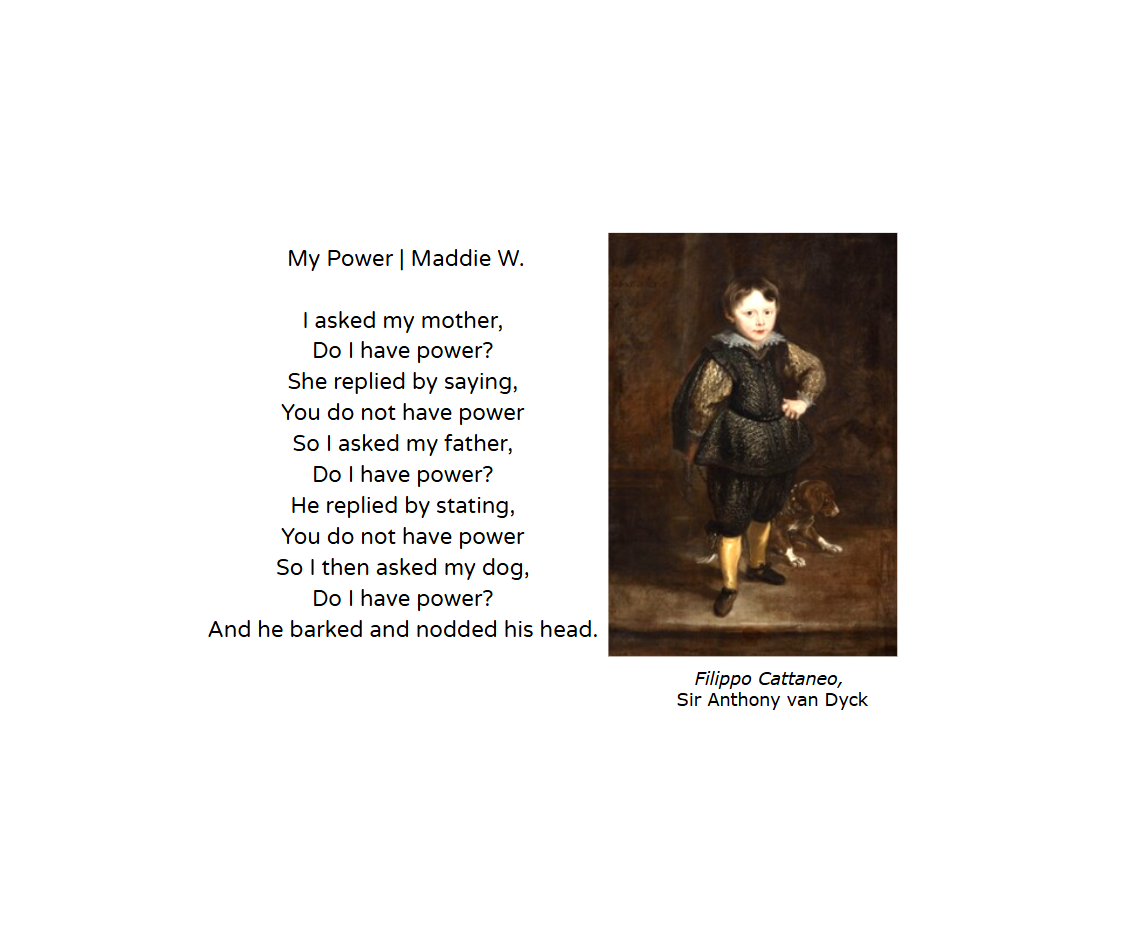
Michael’s brain and ear came up with “he has a way of finding me” and this poem was born. It’s not exactly a poem of address, not exactly a poem of apology, and we don’t know exactly who “he” is. What we do know is that the rhythm is strong and the poem is full of action and emotion. What do you think it signifies that “I will not run again”?
POEM #5 - Justin, 5th grade
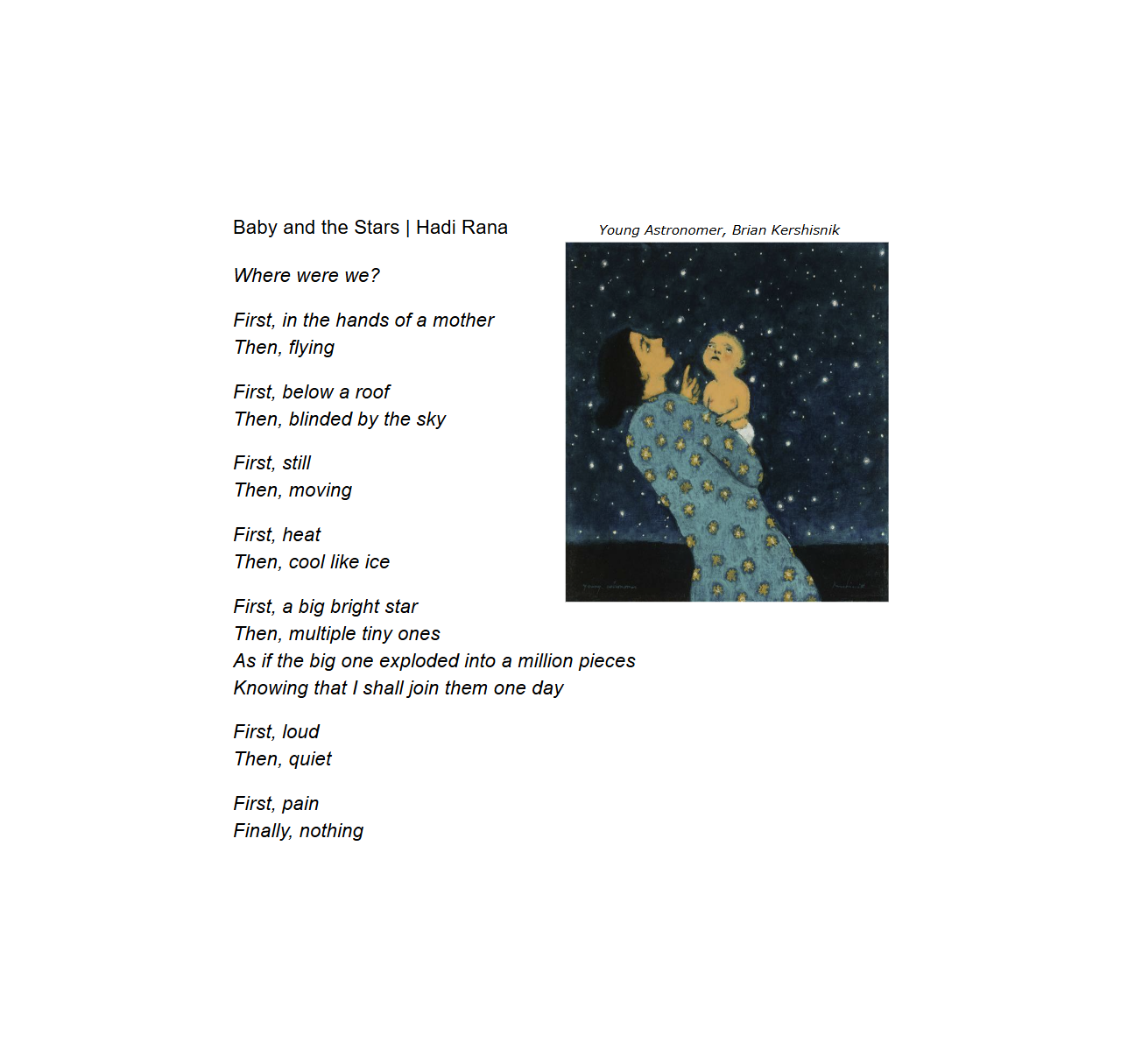
Based on the very famous poem of apology by William Carlos Williams about the plums in the icebox, Justin has written a humorous updated version! This time it’s a pupusa, not plums, and it was calling his name…do you think the speaker really means it when he says he’s sorry? (Also, see how Justin doubled up by writing a poem of apology addressed to his sister!)
POEM #6 - Dylan, 5th grade
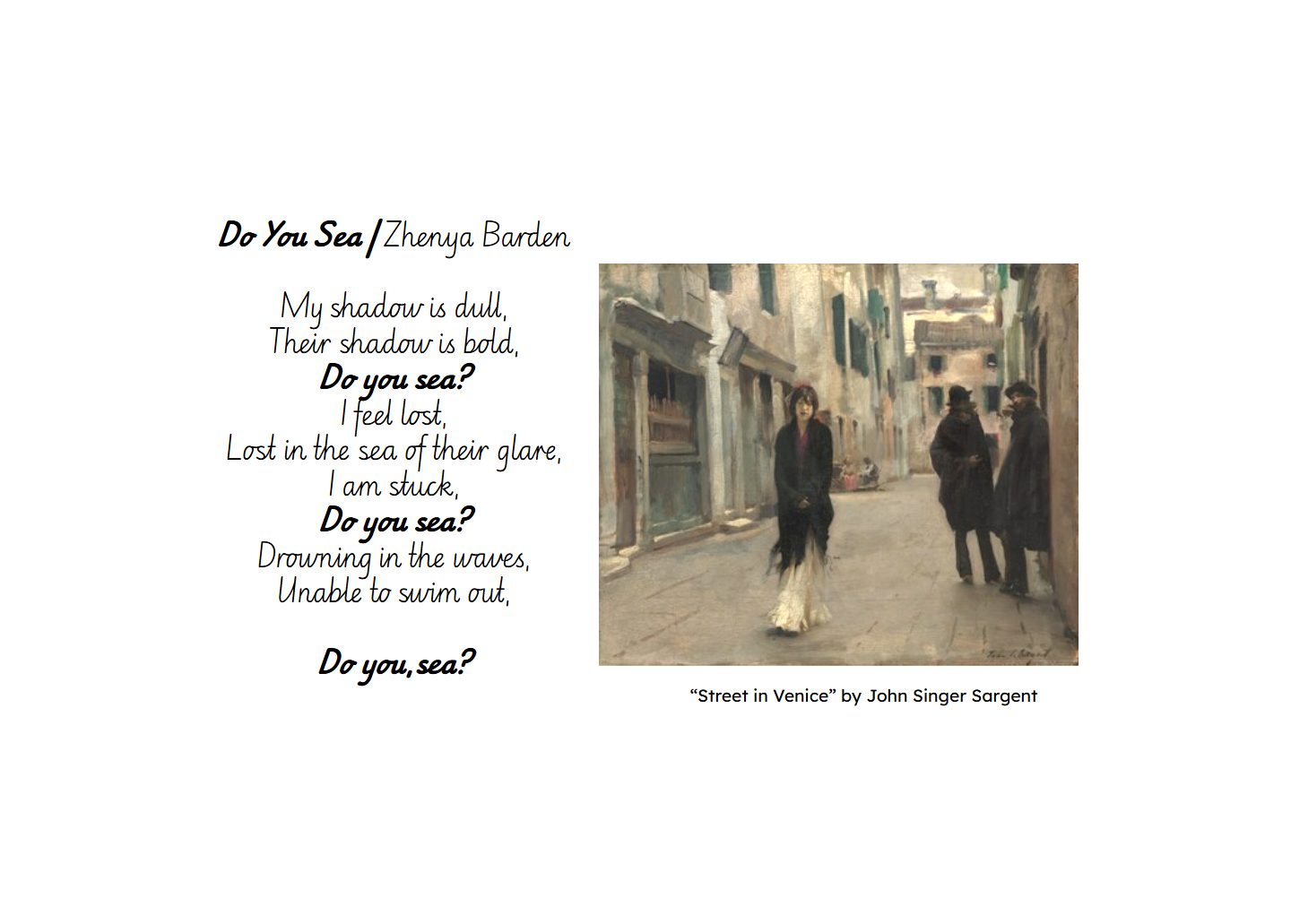
In this poem Dylan’s two stanzas are very distinct—in the first he’s setting the scene, helping us understand the flow of the game. But in the second he addresses his fellow player directly with gratitude and apology, and ends with the reason he’s writing at all—our friends matter to us.
POEM #7 - Emily, 5th grade
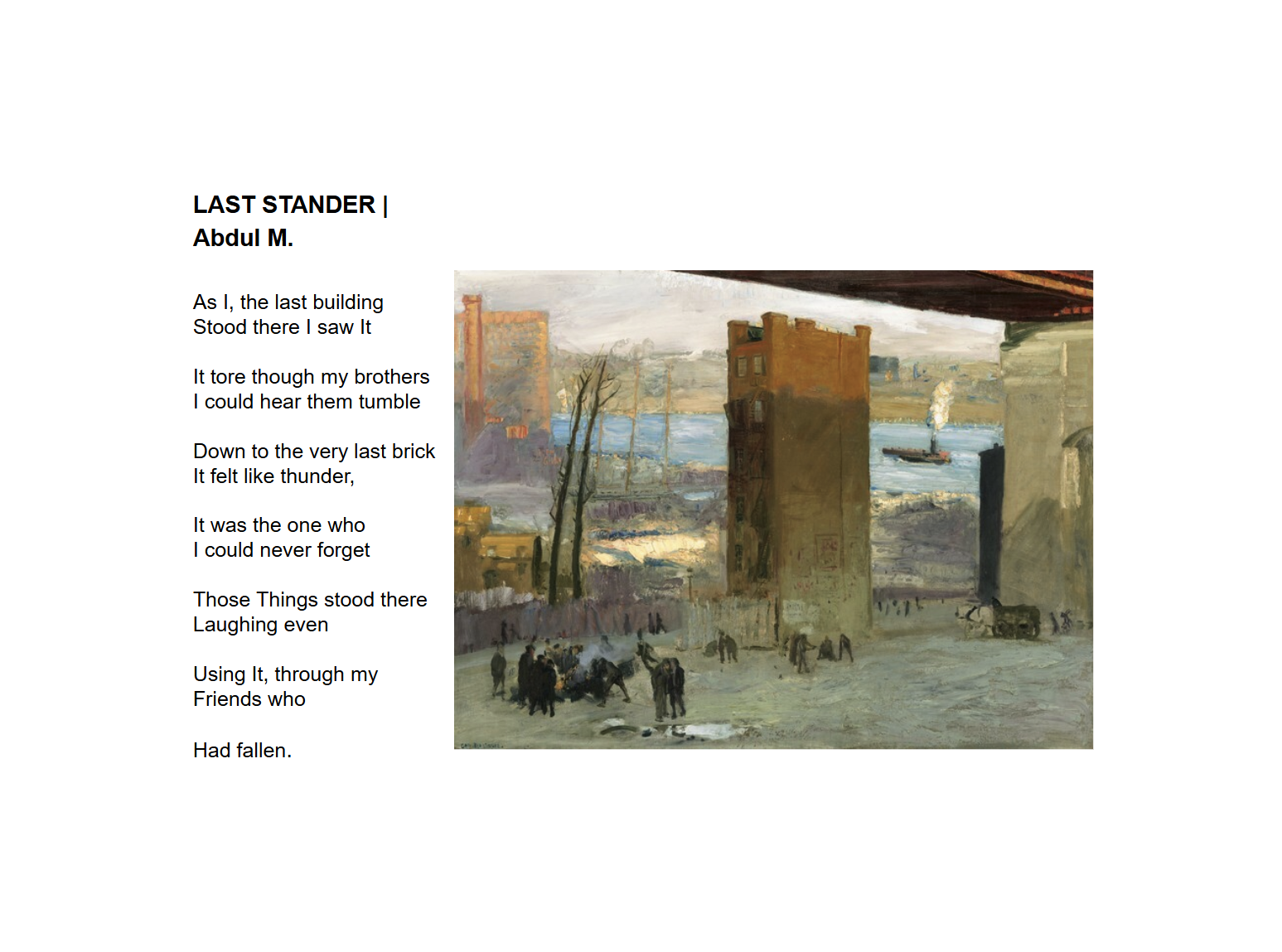
And here’s our last poem of apology—to an object! Emily talks to her trusty phone, using anaphora (repetition of the first words of several lines, “I am sorry”) and some effective rhyming to admit her mistakes and also forgive herself: “From the best owner ever”. And she does all that in 9 lines!
POEM #8 - Wyatt, 5th grade
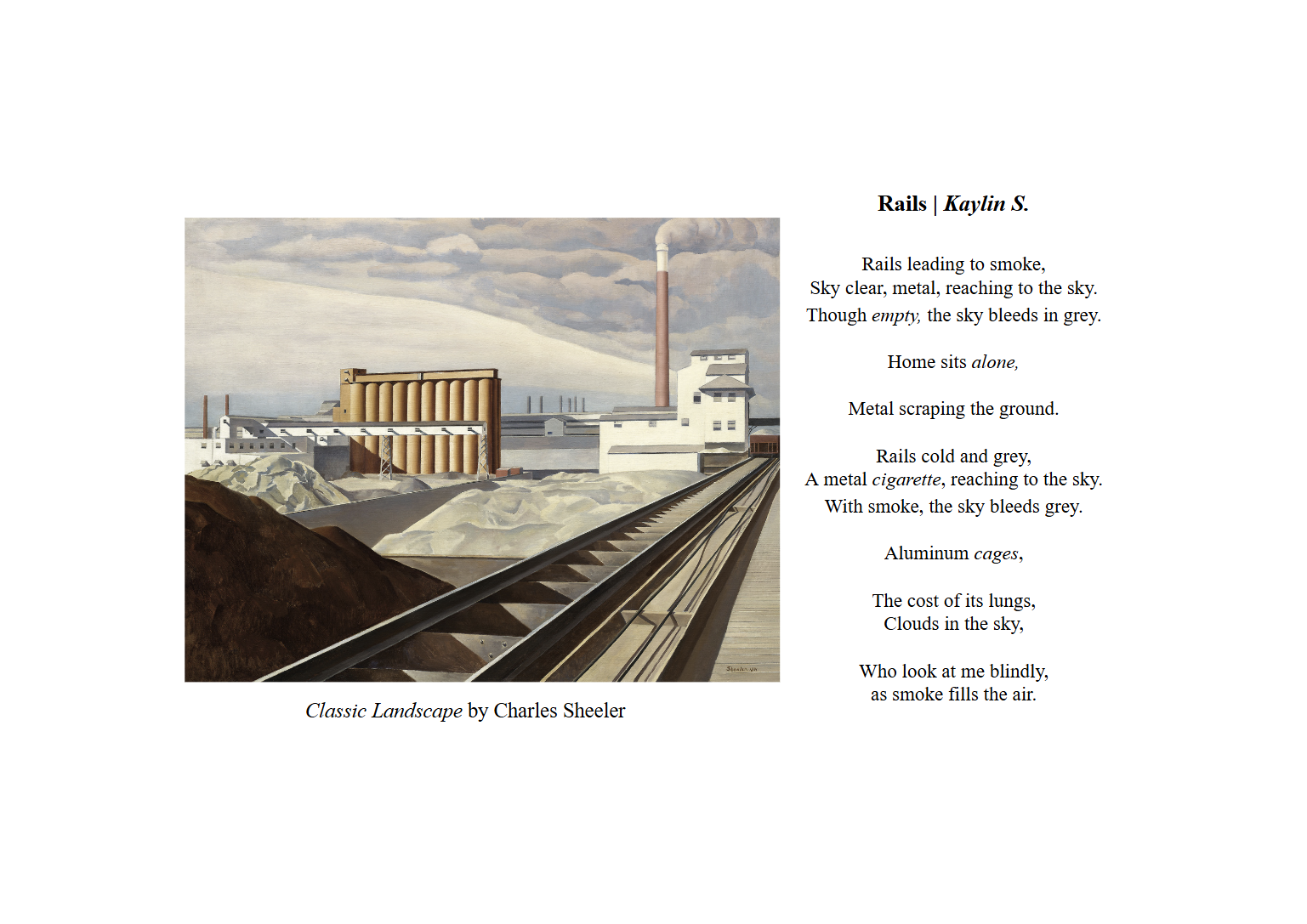
Next up we have some poems of advice, starting with some entertaining and true wisdom from the poet Wyatt. Definitely read this one out loud to appreciate the rhythm of each stanza and the rhymes, which capture a really wide range of outdoors experiences—there’s something for everyone! Don’t you love the way Wyatt uses “suit and tie” as a metaphor for our confined, indoor attitudes?
POEM #9 - Lyla, 5th grade
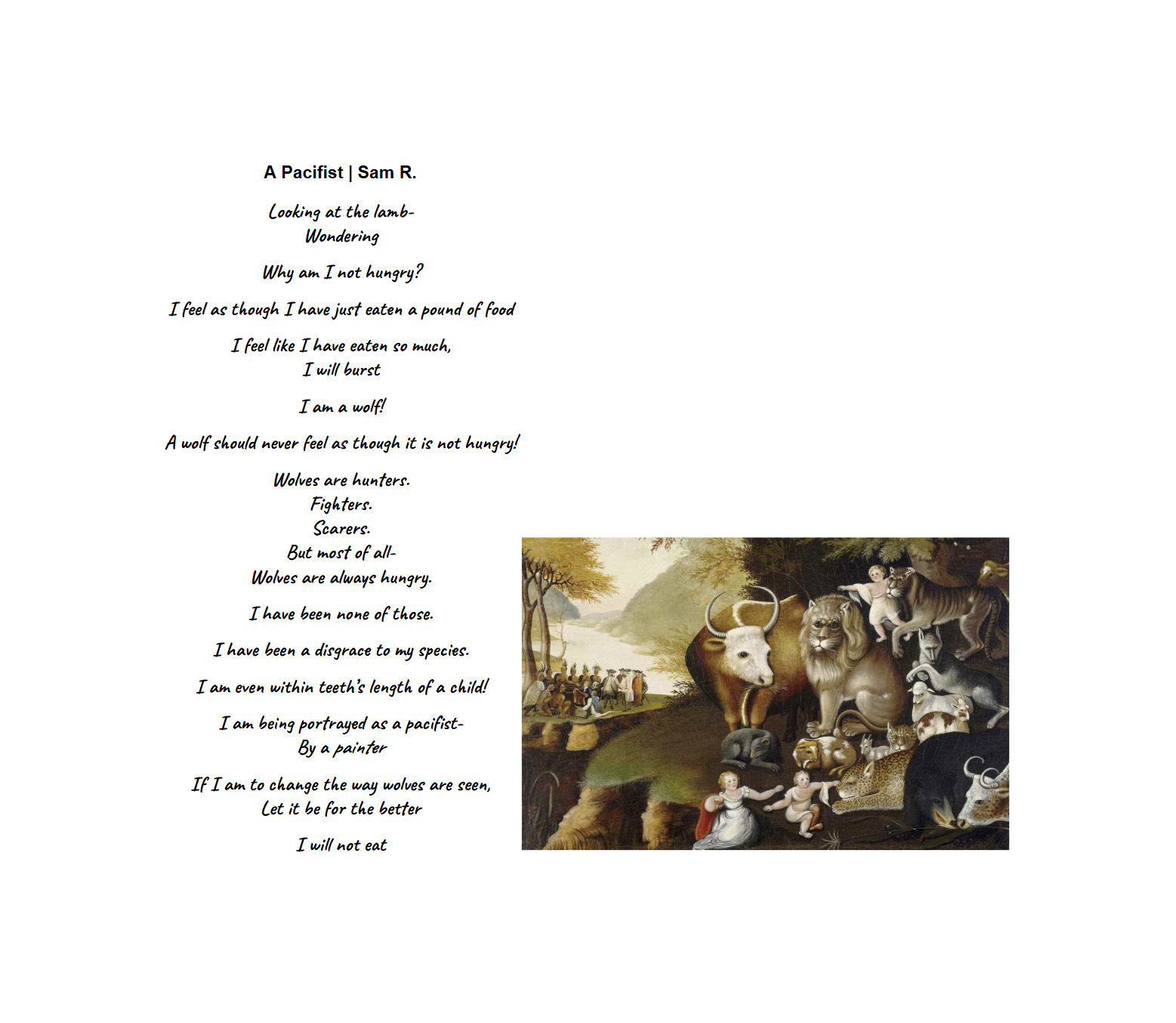
Successful scootering is not just physical; Lyla knows that it takes imagination to master a new skill. She uses short lines, breaking things down into steps, and metaphors to compare scootering first to driving a car and then to flying! Her last little piece of advice can apply in many situations, don’t you think?
POEM #10 - Levi, 5th grade
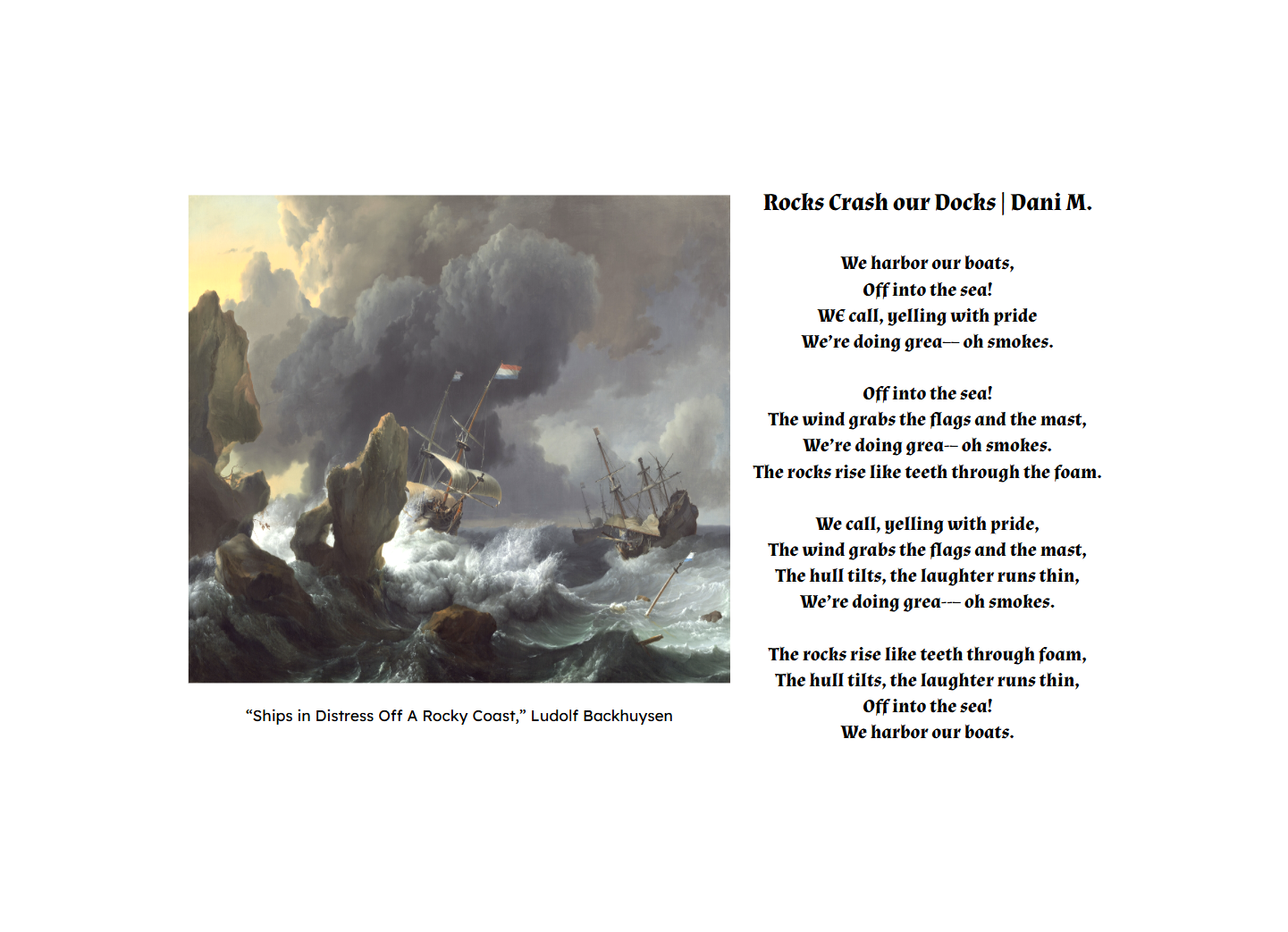
This poem is written in a Malaysian form called a pantoum. A pantoum is a kind of poem with a repeating pattern of lines. Here’s how it works:
It’s written in 4-line stanzas (groups of four lines).
Lines repeat in a special pattern:
The 2nd and 4th lines of one stanza become
the 1st and 3rd lines of the next stanza.
POEM #11 - Uriel, 5th grade
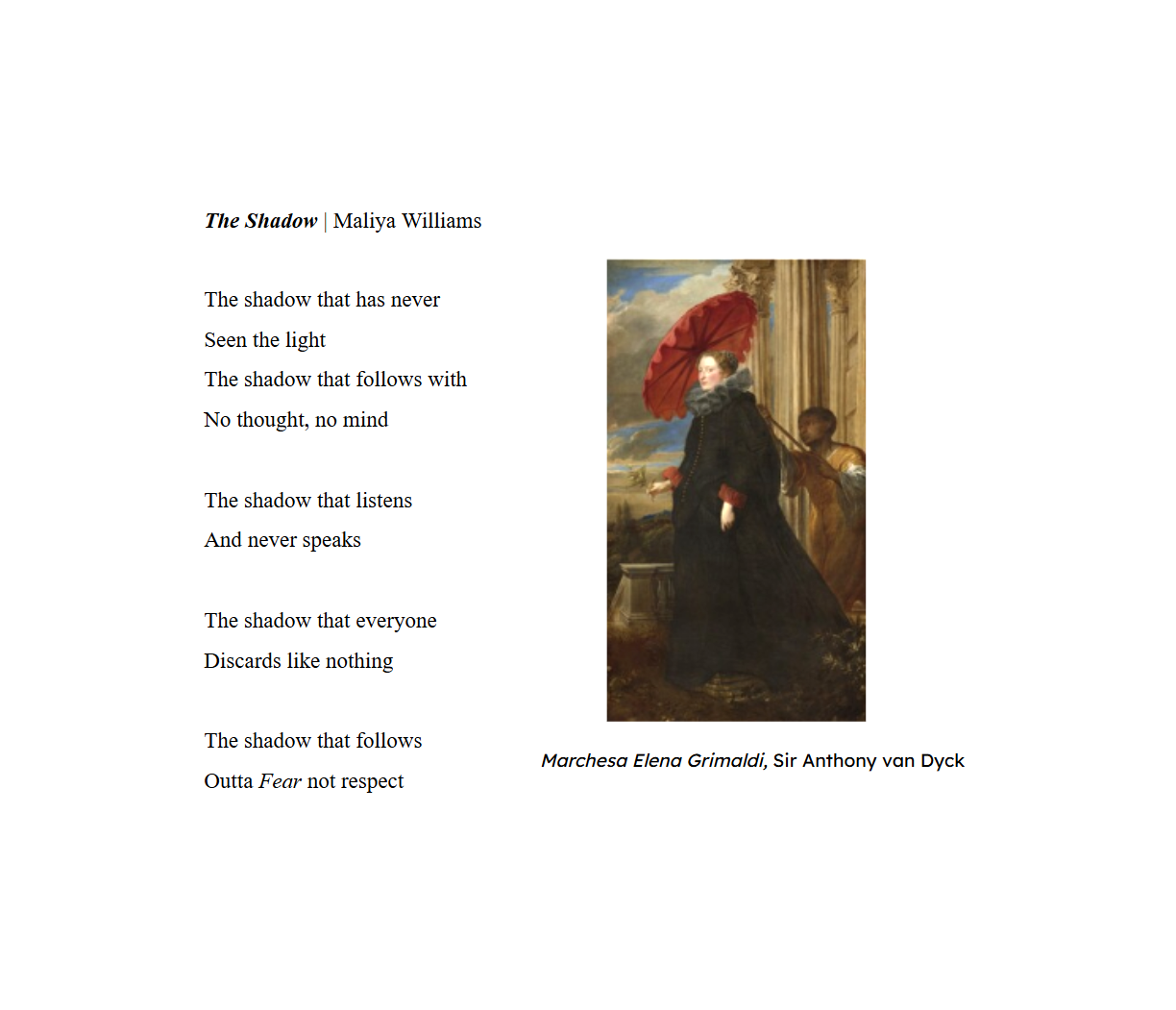
A cool thing about literature of all kinds—but especially poetry—is that you think you’re reading about one thing but then it turns out you’re ALSO reading about another thing. Uriel’s poem says it is giving advice about How to Fly Like a Bird, but hmmmm….are there other times to “get off your seat,” to “try other different things” and then suprise yourself by getting free?
POEM #12 - Uriel, 5th grade
Those are our 12 poems for this issue—maybe one jumped out as your favorite! If so, let us know in the comments below. Look for more ekphrastic poems about paintings from the National Gallery in December, and maybe you’ll submit a poem yourself! Click the SUBMIT button below to get started.
Thanks for reading!
The Editorial We
If you are a teacher developing a poetry habit in your classroom, you might find that an issue of WHISPERshout Magazine is all the lesson you need.
Email whispershoutmagazine@gmail.com or complete the form down below to receive each issue direct to your inbox.



Ekphrastic Poems about Museum Paintings by 6th Graders